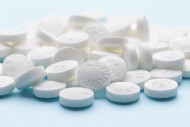
The Dangers of Aspirin
Posted by Djehuty Maatra on Jun 20th 2025
Aspirin is a blood thinner. Thinning the blood is a very dangerous thing to do considering our blood was naturally made thick. Remember when we used to say, “blood is thicker than water” back in the day? Blood is supposed to be thick, not thin. Thinning the blood is very dangerous because thinned blood equals less oxygen in the blood and less oxygen in the blood means less oxygen to the brain and less oxygen to the brain can result in stroke and stroke can lead to or cause paralysis. This is why stroke is a reversible and preventable condition. It doesn’t have to be. It can be prevented with knowledge and care.
When we didn’t know any better, we consumed an aspirin pill daily as we thought we were being proactive and doing something healthy. We weren’t. We were doing something harmful.
You don’t need to thin the blood, ever. What you may need to do is cleanse the walls of the arteries of arterial plaque so more blood can flow freely through them. Western medical doctors under Rockefeller(opathy) would rather thin the blood than to cleanse and open up the arteries to enhance blood flow. More blood flow equals more oxygen flow and more nutrient flow. Oxygen and nutrients are vital to healing.
When the situation results in blocked arteries, Western medical doctors will then perform invasive procedures such as angioplasty, atherectomy, and/or open-heart surgery (coronary artery bypass grafting).
If you’re ever faced with a medical emergency and need to thin the blood, opt for the herb Gingko Biloba instead of aspirin. Aspirin is very harmful to the human body. It not only thins the blood, but it also destroys the myelin sheath (the protective covering of the nerves), causes internal ulcers, more specifically stomach ulcers (due to burning a hole through the mucus membranes), destroys red blood corpuscles, pollutes the blood, toxifies and damages the liver (and in effect, the white of the eyes over time resulting in discoloration of the iris); causes liver damage, toxifies and damages the kidneys (resulting in kidney damage or analgesic nephropathy), and can also cause Reye’s Syndrome, tinnitus, and allergic reaction. Remember, all drugs (including over-the-counter drugs) have adverse side effects. It is the nature of all man-made drugs.
Aspirin is toxic because it contains many harmful ingredients. Aspirin is chiefly comprised of acetylsalicyclic acid, triacetin, coloring agents (such as DC & Yellow 10 Aluminum Lake and FD&C Yellow 6 Aluminum Lake), croscarmellulose sodium, lactose monohydrate, methacrylic acid copolymer, Polysorbate 80, sodium laurel sulfate, and titanium dioxide.
Unbeknownst to many vegans, some brands of aspirin contain shellac as an ingredient. Shellac is a resin secreted by an insect. Shellac is also known as confectioner’s glaze.
Aspirin offers what appears to be relief from headache because aspirin numbs the pain caused by headache (by blocking production of prostaglandin, a chemical that signals pain), the pain being a sensor for what’s really going on in and with the body, for after all, pain is a sensor. Numbing away pain is not addressing the root cause(s) of the headache. This is why headaches always come back. Consuming aspirin for headache is a quick fix, something temporary in nature. Remember, no part of the human body is comprised of aspirin, thus, headaches do not denote an aspirin deficiency.
Headaches can result from a host of things, including but not limited to dehydration (not drinking enough water), stress or tension, constipation (or a toxic colon), food preservatives (such as MSG or monosodium glutamate), toxic fumes, and injury.
Several herbs serving as a safe and effective alternative to aspirin include White Willow (Salix alba) bark, Red Willow (Salix laevigata) bark, Black Willow (Salix nigra) bark, Feverfew (Tanacetum parthenium) leaf, Meadowsweet (Filipendula ulmaria) leaf, Wood Betony (Betonica officinalis) leaf and flower, Woodruff (Galium odoratum), Blue Vervain (Verbena hastata) leaf, Valerian (Valeriana officinalis) root, Corydalis (Corydalis salida) root, and Kola (Cola acuminata) nut. Additionally, a good herbal headache formula containing many or most of the foregoing herbs will do as well.
Product Links:
https://divinemedicinals.com/headache-bulk-loose-tea-bag/?searchid=1431476&search_query=headache
https://divinemedicinals.com/corydalis-root-100-capsules/?searchid=1431480&search_query=corydalis